Skip to content

Private work · individual neurotraining · 2 months

Breakthrough

Breakthrough is one to one mental performance training through individualized neurotraining for established owners and leaders. Over 2 months, you work with your neurotrainer on the pressure you face: decisions you keep revisiting, conversations you put off, or work you struggle to leave behind. You practice practical tools in your everyday life, not only during sessions.

What Breakthrough includes

  • 2 months of private work
  • Individual sessions with your neurotrainer
  • Four preparation videos before your first session
  • Guided exercises and practical tools
  • Practice between sessions, in your real week
  • A session rhythm agreed together during your fit conversation

Individual experiences · outcomes vary

What clients have reported.

When the plan changed

A client tended to wait for certainty before acting and kept overthinking conversations she needed to start.

She stopped waiting for certainty, initiated those conversations, and met unexpected questions during an important presentation with greater confidence.

From avoidance to action

A client kept putting off projects she had only thought about, caught in a familiar sequence of avoidance.

She noticed the sequence, practiced a countdown of five seconds, action windows of ten minutes, and timers, and those projects began getting done.

Standards without the spiral

When something was damaged at work, the client felt angry.

The client communicated, reframed the moment, used humor, and moved on rather than spreading the anger, without lowering standards.

More client stories

Who it is for

Keep the ambition. Change how you carry it.

You have built something real. You don’t want to lose your drive, only the cost of carrying everything this way. Leaders usually reach out when they recognize themselves in a few of these:

  • You can’t switch off. The workday ends and your mind keeps working.
  • Everything seems to depend on you, so you keep carrying more.
  • You take care of everyone’s needs and put your own last.
  • You run on autopilot: reacting, rushing, and moving on to the next thing.
  • You look confident from the outside while doubting yourself inside.
  • You are ready to actively practice, not only talk about it.

We work with owners and leaders across the United States and internationally, with clients around the world and a regional base in Scranton and Wilkes-Barre.

Want to look at your own pattern first? Start with our practical guide, Leadership Under Pressure. If decisions keep landing on your desk, read how to delegate decisions without becoming the bottleneck.

Why practice, not only insight

Your reactions are practiced. So are new responses.

At a group retreat, a man smiles from an armchair while a woman beside him reads a worksheet in her lap.
A reflection and conversation moment at a past group retreat.

Under pressure, attention narrows and familiar reactions take over: the same worry at night, the same urge to do it yourself, the same tension in your body. Those reactions were learned through repetition, which is also how a different response becomes available.

We draw on ideas from neuroscience and human behavior to design the exercises: noticing what happens in your body and mind, rehearsing a different response, and repeating it in real situations. We don’t promise to rewire your brain, cure anything, or remove stress. The aim is practical: another response you can actually use when it counts.

What happens

A clear process, personalized to you.

  1. Explore the fit

    Send a private inquiry. We review it and contact you to talk honestly about fit, your goals, the rhythm of sessions, and the investment and available options.

  2. Prepare

    Once you decide to proceed, a preparation series of four short videos helps you slow down, notice what is happening, and arrive at your first session with clarity.

  3. Train

    In individual sessions with your neurotrainer, you work through guided exercises built around your situation and choose the tools that fit.

  4. Practice

    Between sessions, you use those tools in the decisions, conversations, and boundaries already in front of you.

  5. Integrate

    Over the two months, you keep what works and adjust what doesn’t, so the new response is available when it matters.

It is a structured neurotraining experience, personalized around the challenge you bring. How often you meet and the exact rhythm of sessions are agreed together during your conversation, around your goals and schedule.

Tools you practice

Practical tools, used in your real week.

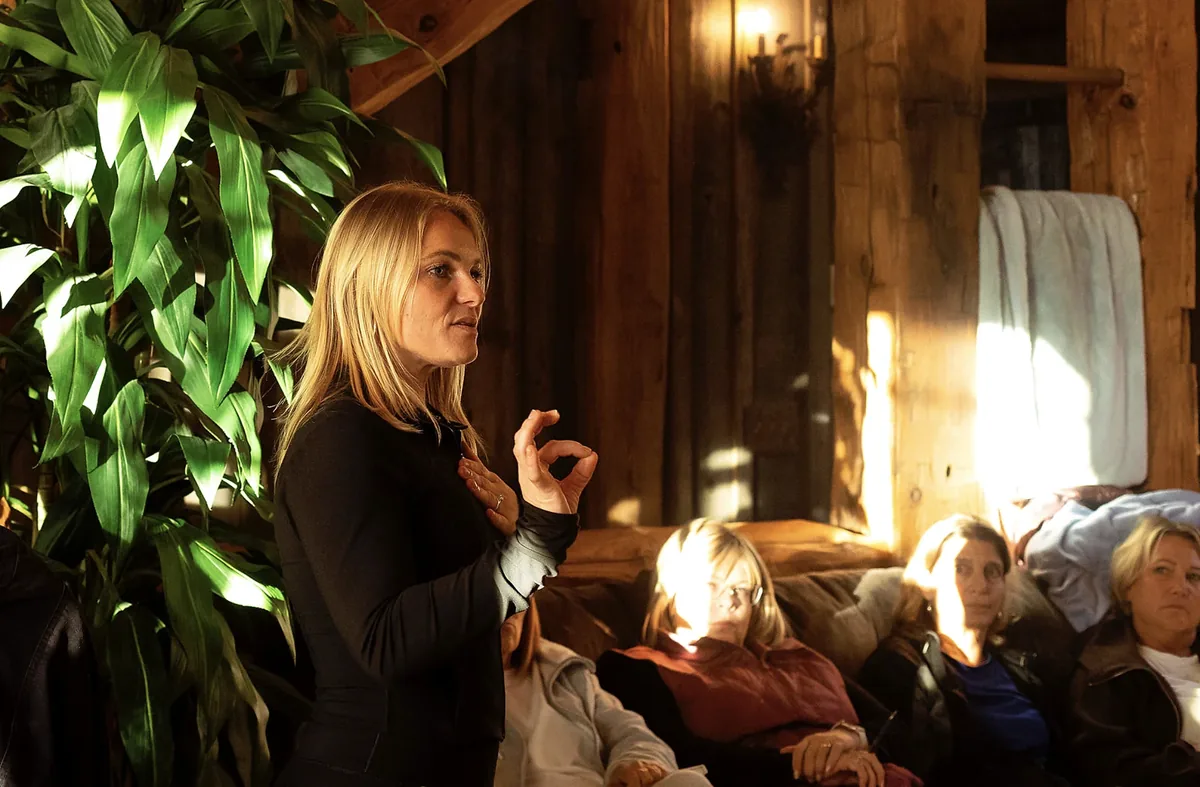
Lacey Cook speaks and gestures to participants seated on a sofa in a sunlit lodge room.
Lacey Cook guiding a practice during a group retreat.

Self observation

Notice what happens before you react.

For example: catching the moment your shoulders tighten as a message arrives, before you reply.

Reframing

Change the meaning you give a situation, so you have more options.

For example: turning “if I don’t do it, it won’t get done” into a question you can test this week.

Mental rehearsal

Practice a moment in your mind before you live it.

For example: walking through tomorrow’s difficult conversation, including the first sentence you will say.

Breathing and body awareness

Use your breath and body to change your state.

For example: a slow breath and a physical reset between meetings, so one meeting doesn’t follow you into the next.

Habit stacking

Attach a new practice to something you already do.

For example: a two minute close of day routine each time you shut your laptop.

Integration

Keep what works so it holds when life gets busy.

For example: a short weekly review of what helped, what didn’t, and what to repeat.

Close view of a participant holding a pen over a printed reflection worksheet resting on her lap.
A reflection worksheet in use during a past group retreat.

Some exercises use short written reflection, so what you notice becomes something concrete you can try in the week ahead.

Hear the approach

How stress works, and what you can do in the moment.

An episode of the Move With Intention podcast with Lacey Cook on the neuroscience of stress. Select the video to load it; captions can be turned on with the CC button in the player where YouTube provides them.

What if

What if the next time the pattern appears, you have another response available?

The aim is not a perfect life. It is greater trust when plans change, clearer action when fear appears, and choices that fit what matters to you.

Explore the fit

Start with an honest conversation.

Breakthrough runs for 2 months. We’ll discuss the investment and available options during our conversation. Readiness means being willing to look closely, participate, practice, and take responsibility for your next action. It does not mean having everything figured out.

After you submit your inquiry, we review it and contact you to discuss fit, your goals, the rhythm of sessions, and the investment and options. Once you decide to proceed, the preparation videos come before your first session. Architect and Visionary are longer private options we can discuss with you.

For ongoing practice alongside others, there is also the Move With Intention community.

Common questions

Is this therapy?

No. Breakthrough is neurotraining for personal and professional performance. It does not diagnose or treat mental health conditions. If you are looking for clinical care, a licensed professional is the right place to start.

Do I need to know the exact problem?

No. You do need a meaningful area you are willing to explore honestly.

What does a neurotrainer do?

Your neurotrainer guides the exercises, helps you notice what drives your reactions, and works with you to choose and adjust practical tools for your real situations. You do the practicing.

Does applying guarantee a fit?

No. The inquiry helps both sides decide whether the work is appropriate.

Breakthrough inquiry

Eight short questions in three steps. We’ll review your inquiry and contact you to discuss whether Breakthrough is a fit.

  1. Step 1
  2. Step 2
  3. Step 3

Step 1 of 3: Your situation

Your situation